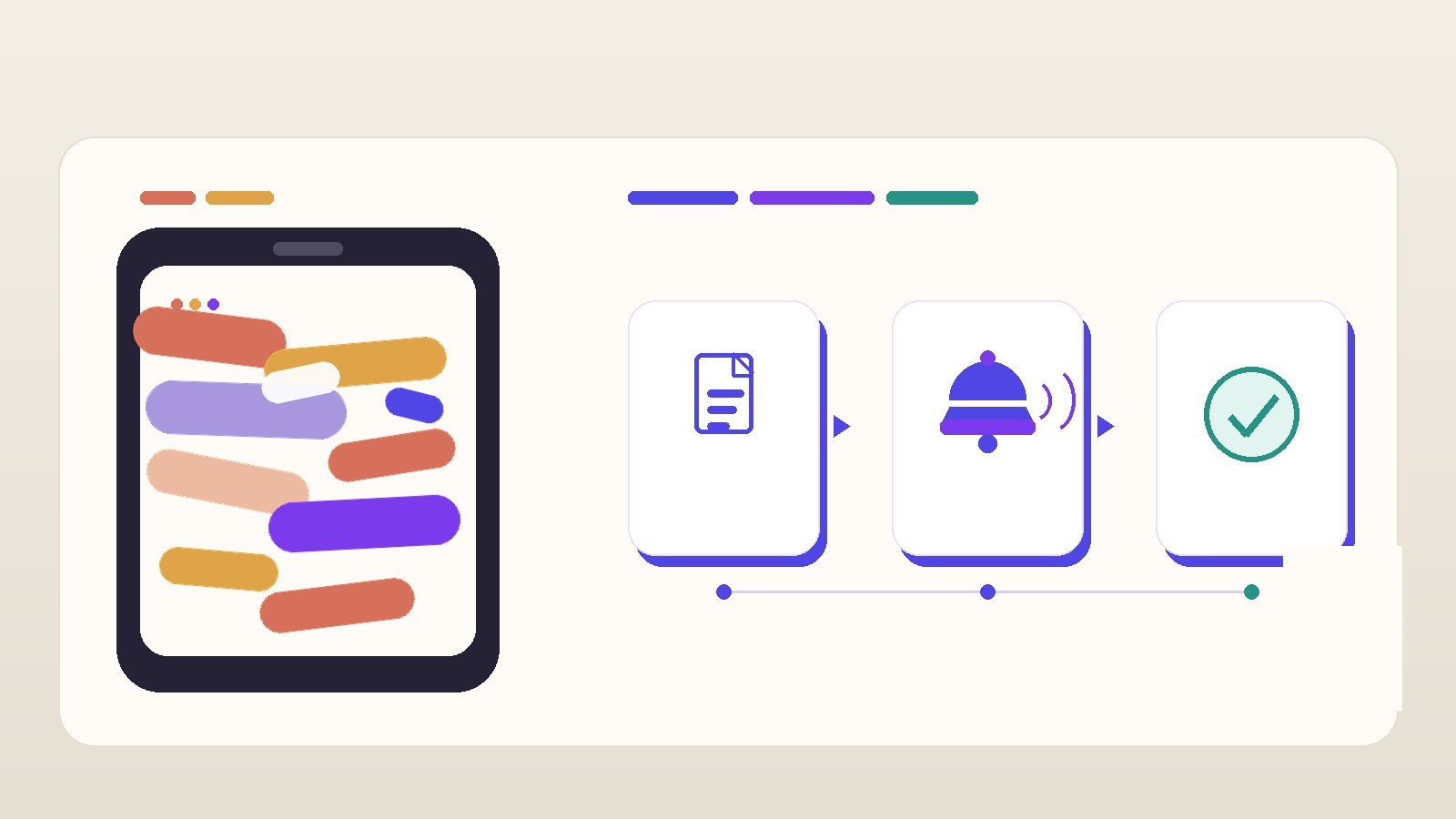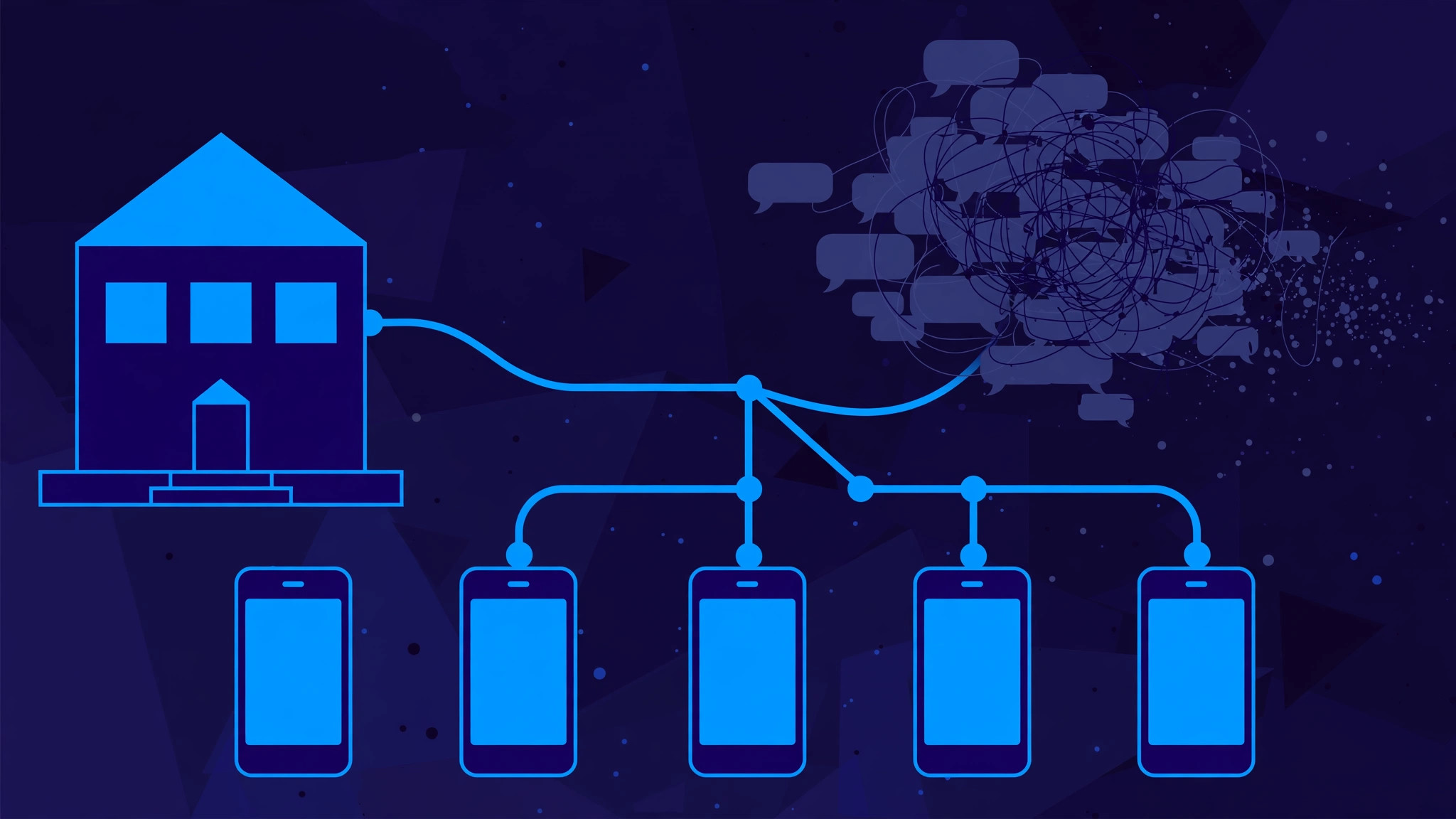
A parent misses the parent-teacher meeting because the notice sat eighty messages up in a class WhatsApp group. A fee reminder never reached the mother, because she muted the group months ago. The school sent both messages — the channel lost them. WhatsApp is where parents already are, but a group chat was never built to carry official school communication. Structured parent communication fixes this: each message goes to the right parents, on the right channel, with a record that proves it arrived. That is how Connectedu is built.
The class WhatsApp group was never a system
Most schools never chose WhatsApp as their communication system. It happened by itself: a class teacher created a group in the first week of term, and within a month it became the school's notice board, help desk and complaint box. Then the volume grew — good-morning forwards, homework questions asked ten times, a debate about the sports-day jersey — and the official messages became five per cent of the traffic — the only five per cent that mattered.
When a parent says "we never got the message", they are usually telling the truth: it went into a stream nobody can search, nobody owns and nobody can prove. The teacher's personal number is now in the hands of fifty families. If she leaves, the group stays behind, tied to her number. None of this is a discipline problem — it is an open social group doing a system's job.
Four ways messages go missing
Noise drowns the message. A class group mixes official notices, genuine questions and pure chatter in one stream. Parents cope by muting it — and once it is muted, the one message that mattered, school closed tomorrow because of rain, goes unread. The office spends the next morning fielding "we didn't know" calls.
There is no record. If a parent says "you never told us about the trip fee", there is no way to show what was sent, to whom and when. Messages scroll away, and a teacher who changes phones loses the admin rights. For anything involving money or a child's safety, a school needs a sent-record it can point to, not a chat anyone can delete from their own phone.
Every message goes to everyone. A fee reminder for twelve defaulters goes to all fifty parents. When parents keep getting messages that do not concern them, they learn to ignore all school messages — including the ones that do.
Privacy quietly leaks. The day a school adds forty-five parents to a group, it has handed every parent the personal phone number of every other parent, plus the teacher's. Marks and fee balances get posted where the whole class can see them — the opposite of the care India's data protection law expects schools to take with personal data.
What structured communication actually looks like
Structured communication does not mean abandoning WhatsApp. It means separating the official channel from the social one.
One record behind every message. Messages are sent from the school's student records, so a message about a child goes to that child's parents — directly, not into a crowd.
An audience, chosen on purpose. The sender picks the audience first: the whole school, one class, or twelve specific parents. Nothing goes to people it does not concern, so parents stop learning to ignore school messages.
The channel matched to the urgency. Daily homework and attendance go in the app, free to send and always findable. A fee due date goes with a push notification. A same-day closure or safety alert goes further — push plus SMS or WhatsApp, so it lands even if the app is not installed. Formal letters go as PDFs a parent can search and print.
A record of what was sent. Every message is logged — what, to whom, when, on which channel — so when a parent says they were not told, the office can check in seconds.
The pieces that close the loop
Structure alone is not enough. Four features turn a sent message into one that was actually received. Read receipts close the biggest blind spot: when the teacher can see that forty-eight of fifty-two parents opened the meeting notice, she follows up with just the four who missed it. Approval before sending stops mistakes reaching fifty families: a teacher drafts, a principal checks, then it goes out. Emergency alerts get their own type — high priority, sent on every channel at once, able to wake a phone even when the app was closed. And messages that send themselves take the routine work off teachers: marking attendance sends the alert, collecting a fee sends the receipt, publishing a result notifies the parents.
How Connectedu puts it together
In Connectedu, parent communication sits inside the school platform, because the messages are only as good as the records behind them. Attendance, fees, exams and messaging all read from the same student record, so a message never goes to the wrong parent or the wrong class.
Messages go out through the Connectedu parent app as in-app notices with push alerts, with WhatsApp and SMS alongside for extra reach. Teachers message parents through structured one-to-one chat and class broadcasts, with read receipts, and without sharing anyone's personal phone number. Sensitive messages pass through an approval workflow, emergency alerts have their own high-priority type, and routine messages are triggered automatically from the record itself.
Parents do not hear from the school more — they hear from it once, clearly, and can find the message again later. The class WhatsApp group can go back to what it is good at: parents helping each other.
Frequently asked questions
Should schools stop using WhatsApp entirely?
No. Parents are on WhatsApp, and it is the best channel for reach. The fix is to stop using an open group as the system of record: keep WhatsApp for official notices sent as controlled, logged broadcasts, and move the day-to-day flow into the parent app, where messages are organised, searchable and free to send.
How do parents know a message is genuinely from the school?
Because it arrives in the school's own app or from the school's official number, addressed to their own child. Anything official comes from one place; anything in the class group is not binding.
What if a parent has not installed the school app?
That is why one channel is never enough. Urgent messages go out on more than one channel — push plus SMS or WhatsApp — so they land even without the app. The school can also see who has not installed it and nudge them.
Can teachers still message parents directly?
Yes, through structured one-to-one chat inside the app, with read receipts and without sharing personal phone numbers. The teacher answers on her own schedule, and the conversation is attached to the student's record, so the next teacher sees the history instead of starting from zero.
Talk to us about parent communication at your school
If your school's messages are getting lost in WhatsApp groups, Connectedu can give you a structured channel your parents will actually read. Talk to InRay Labs and we will show you how it works on your own school's data.