Courier management software is the operating system of a parcel delivery company. It runs everything from the moment a shipment is booked to the moment it lands on a doorstep: the label, the pickup, the sorting hub, the truck between cities, the driver's route, the proof of delivery and the invoice. This is how that software works, from booking to billing.
Booking and the airway bill
Every parcel starts with a booking. A merchant enters the shipment in a portal, uploads a spreadsheet of orders, or sends it through an API connected to their online store. The moment the booking is created, the system generates an airway bill number — the unique ID that follows the parcel for its whole journey — and prints a barcode label. The label also holds the routing information the parcel needs, such as the destination hub and the sorting gate. The price is worked out at the same moment from the merchant's rate card: weight, size, destination zone and service type.
Pickup: the parcel enters the network
Once booked, the parcel needs collecting. The system assigns each pickup to the courier responsible for that area and groups the day's pickups into an efficient route on the courier's phone. At the sender's door, the courier scans every parcel and prints a label on the spot if needed. A parcel that is damaged or heavier than declared gets flagged there and then, before it reaches the hub. Every scan updates the tracking record.
The hub: sorting by gate and zone
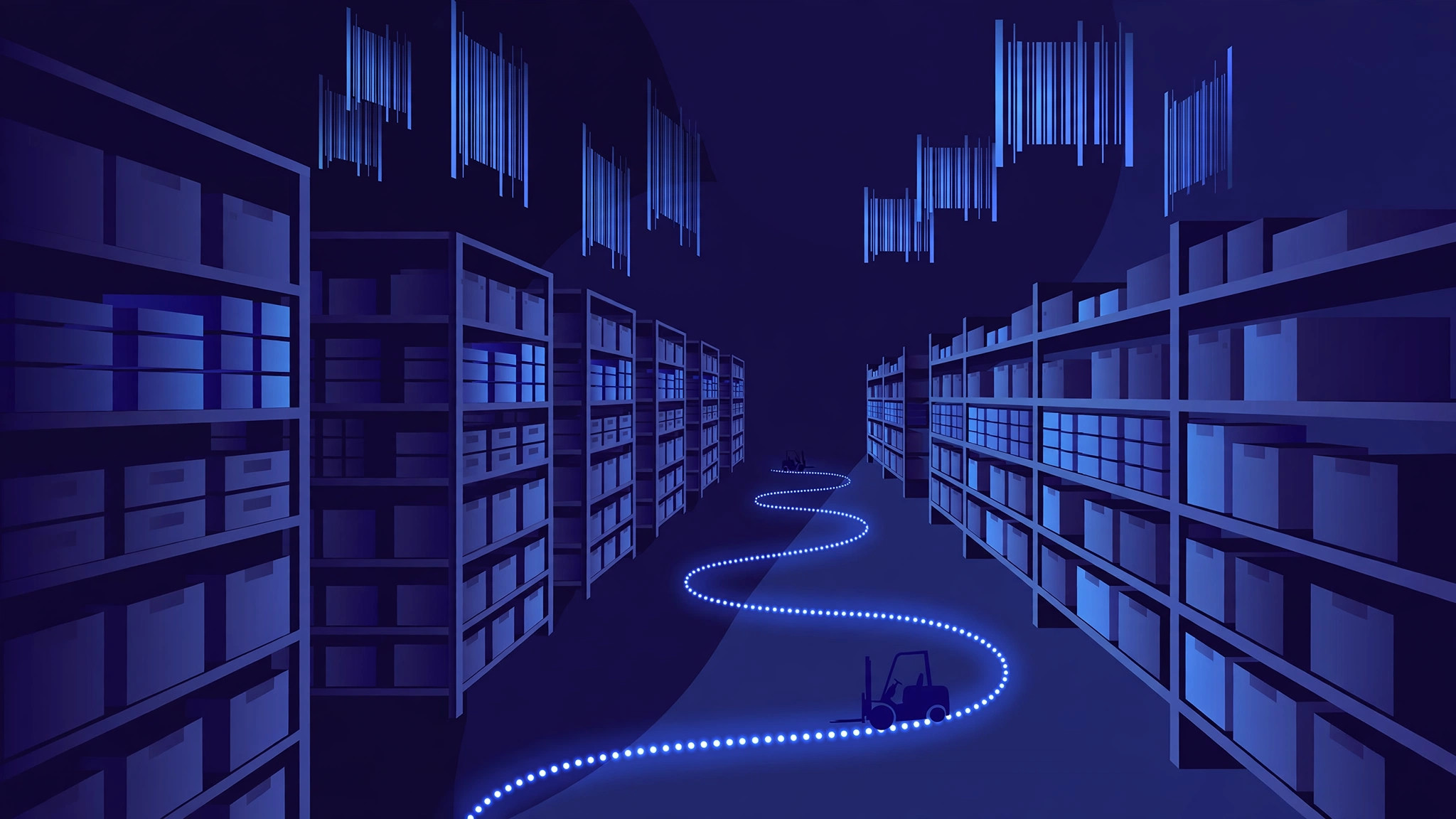
The hub is where the network sorts itself out. When a parcel arrives, it is scanned in, weighed and measured, and the system compares the real weight with the declared weight — a difference is raised on the spot, because it changes the price. Then comes sorting: the software resolves the destination zone from the address and maps it to a sorting gate, so all parcels for one city or region go to one gate. In a small depot, staff sort by reading the label; in a large hub, a conveyor belt reads the barcode and diverts each parcel to its gate automatically. Sorted parcels are sealed into bags with a manifest, so one scan loads a whole bag onto a truck.
Linehaul: moving parcels between hubs
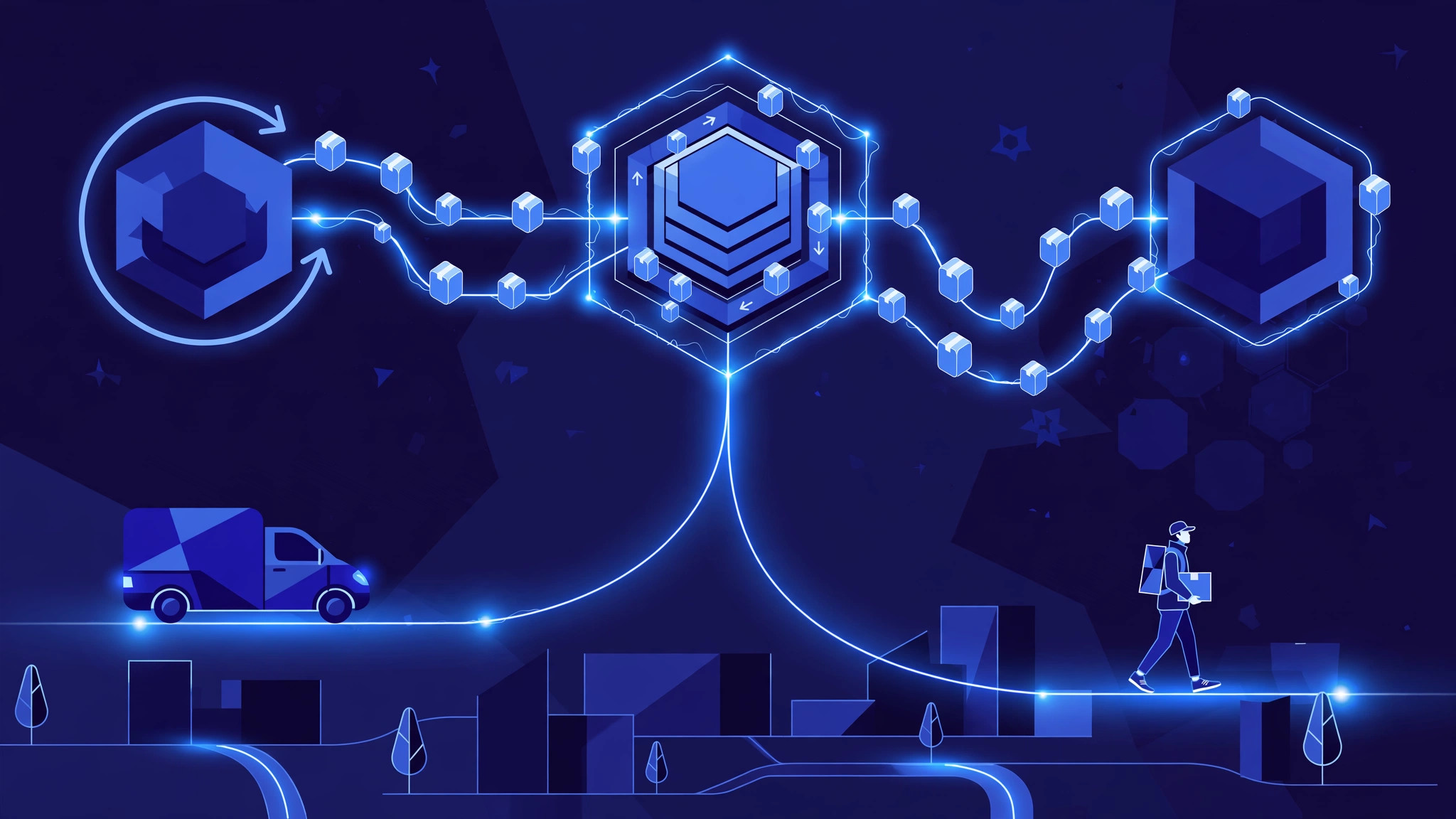
Most parcels travel between cities before they reach their destination, and that leg is called linehaul. The software groups parcels into batches by destination hub — one batch per lane, such as the nightly run from one city to another — and validates every parcel as it is loaded, so the wrong destination is flagged before the truck leaves. When the truck departs, the batch closes and a manifest is generated automatically. For parcels travelling through several hubs, the system models the network as a graph and works out the shortest path through it.
Route optimisation and dispatch
At the destination hub, the last mile begins. The software takes the day's deliveries and solves a routing problem: which stops go to which driver, and in what order, so total distance and time are as low as possible. A good optimiser respects delivery time windows, vehicle limits, driver shifts and live traffic, and replans in seconds when an order changes. The finished route goes straight to the driver's phone app, with turn-by-turn navigation and per-stop notes.
The last mile: proof of delivery
The driver works through the route stop by stop, and each delivery is closed with proof: a photo of the parcel at the door, a signature on the phone screen, or a barcode scan — stamped with the time and the GPS location. Some deliveries need a one-time PIN, an ID check or a locker pickup event instead. Every close reaches the dispatch desk instantly, and the customer gets a notification with a live tracking link. If a delivery fails — nobody home, wrong address, refused — the driver records a coded reason, so a reattempt can be scheduled automatically.
Cash on delivery and billing
In many markets, the customer pays when the parcel arrives, and the software has to track that money carefully. Each trip's expected cash is compared with the payments the driver hands in at the end of the day, and any gap is flagged. The collected cash is then remitted to the merchant on an agreed cycle, net of the delivery fee, with a statement the merchant can check line by line. Billing is built from the same data: every scan, weighing and delivery feeds the invoice, so charges match what actually happened.
Returns and failed deliveries
A failed delivery is reattempted on a schedule the merchant sets — usually one or two more tries — and if it still cannot be delivered, it becomes a return to origin, flowing back through the hub to the merchant. Customer returns work the same way: the customer books a return, the courier collects it, and it is routed back with its own tracking record. A system that loses returns loses merchants, so the return journey gets the same scans and the same visibility as the outward one.
What good courier software gets right
They give every parcel one record and one number, and every scan, weigh-in, sort, load and delivery updates that same record — so the customer, the merchant and the dispatcher all see the same truth. They decide the route when the parcel is created and print it on the label. They optimise routes on real roads and real traffic. And they close the loop on money: cash collected, cash remitted, invoices that match the scans.
Frequently asked questions
What is the difference between courier management software and last-mile delivery software?
Last-mile software covers only the final leg: route optimisation, dispatch and proof of delivery. Courier management software covers the whole journey: booking, pickup, hub sorting, linehaul, last-mile delivery, cash on delivery, returns and billing.
How does hub sorting work in courier software?
The system maps the delivery address to a destination zone and a sorting gate at the hub. In small depots, staff sort by reading the label; in large hubs, a conveyor belt reads the barcode and diverts each parcel to its gate automatically.
How does route optimisation work for couriers?
The optimiser assigns the day's stops to drivers in the order that minimises total distance and time, while respecting delivery windows, vehicle capacity, driver shifts and live traffic. It replans in seconds when orders change, and sends the finished route straight to the driver's phone.
Is courier management software worth it for a small courier company?
Yes, once parcel volumes outgrow spreadsheets and phone calls. Even a small team gains from automatic zone routing, scanned proof at every step, optimised routes and COD reconciliation — the missed parcels and uncollected cash it prevents usually pay for the system.
Build your courier management software with InRay Labs
If you run a courier or last-mile delivery business and need software that knows every parcel, every hub and every driver — bookings, labels, sorting, linehaul, routes, proof of delivery and COD in one place — InRay Labs builds it. Talk to us about your courier system.