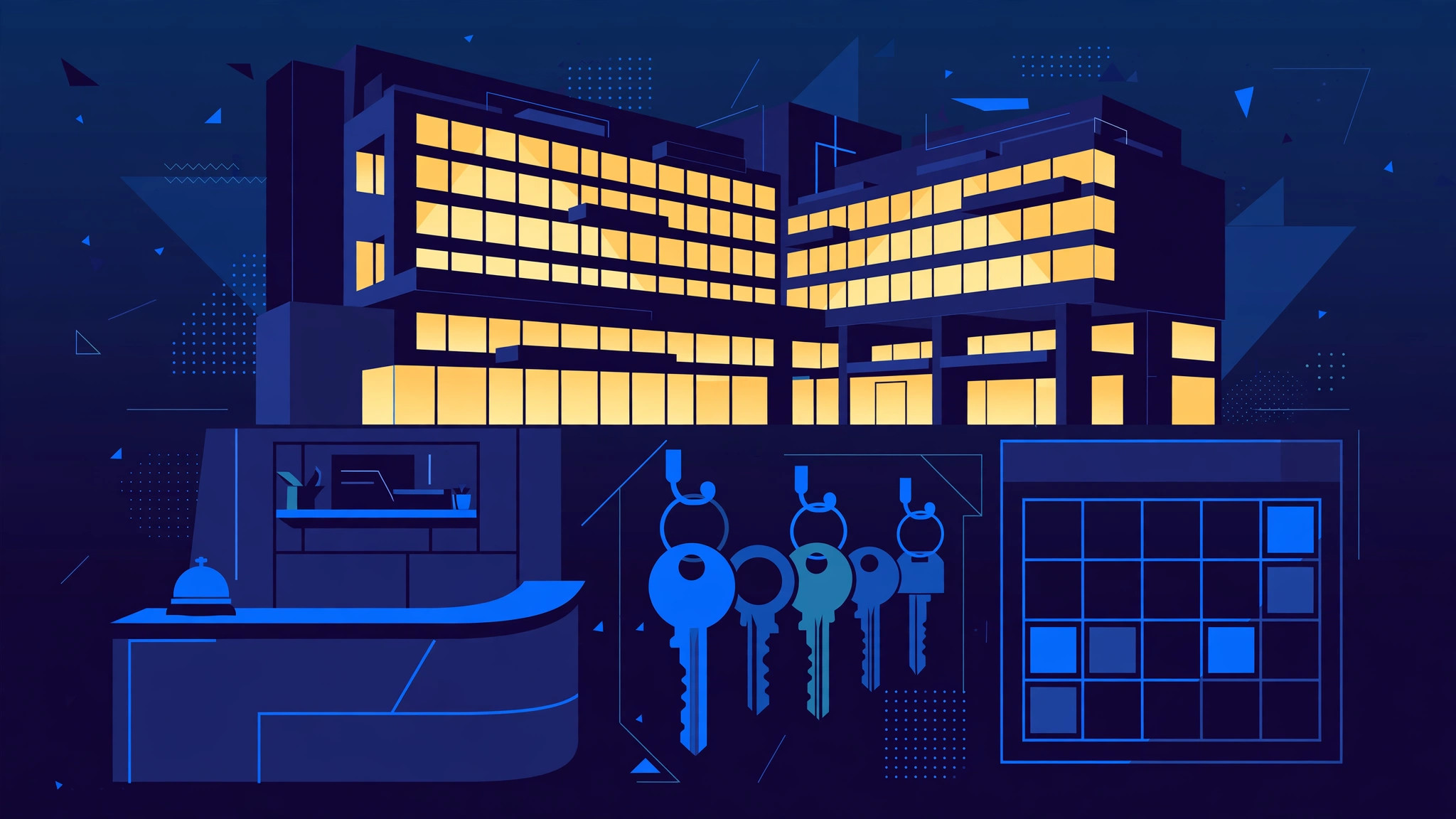
Hotel property management software, usually called a PMS, is the system that runs a hotel's day-to-day operations from one place. It holds every reservation, tracks which rooms are occupied, clean or under maintenance, coordinates housekeeping, and builds each guest's bill. When a booking arrives from any channel, the PMS updates availability everywhere at once, so the same room is never sold twice. In short, it replaces the front-desk ledger, the housekeeping whiteboard and the billing spreadsheet with one shared record that every department works from.
One record for every stay
At the centre of a PMS sits the reservation record: the guest's details, the room type booked, the dates, the rate plan, special requests and payment status. Every department reads and writes to this same record, which is what keeps the hotel in sync. When the front desk moves a guest to a different room, housekeeping sees the change immediately. When the restaurant posts a dinner charge, it lands on the guest's bill without anyone retyping it.
Reservations and inventory: one pool of rooms
Every booking draws on one shared pool of room inventory. Whether a guest books on the hotel website, through an online travel agency, by phone or at the front desk, the reservation lands in the same system and the available count for that room type drops by one. This is what prevents double bookings: there is no separate inventory per channel, only one pool that every channel reads from.
The PMS also holds the rate plans and rules behind each room type: the standard rate, the breakfast-included rate, the corporate rate, minimum-stay rules and closed-to-arrival dates. Staff can change a rate or close a room type for a date range in one place, and the change flows out to every connected channel.
Front desk and check-in: assigning rooms, not just names
Check-in is where the reservation becomes a stay. Staff confirm the guest's identity, check the payment method, assign a specific room, and open the guest folio — the running bill for the stay. Room assignment is a small decision with big consequences: the system suggests rooms that are clean, match the booked type, and fit the guest's requests, such as a high floor or a room away from the lift.
Housekeeping and maintenance: the room-status board
Housekeeping runs on a live room-status board. Every room sits in one state at any time: occupied, vacant and clean, vacant and dirty, inspected, or out of order for maintenance. When a guest checks out, the room flips to dirty and appears on the housekeeping team's task list, often on a mobile device. When a housekeeper finishes a room, they mark it clean, and the front desk can assign it to the next arrival within seconds.
The same board carries maintenance work. A leaking tap or a broken air conditioner is logged against the room, which moves to out-of-order status so it cannot be sold until the repair is signed off.
Billing and the guest folio: one bill, every charge
The guest folio is the running account for a stay. Room charges post automatically each night, and charges from connected systems — the restaurant point of sale, the spa, parking — post directly to the folio as they happen. Taxes, service charges and discounts apply by rule, not by hand, which keeps the final bill consistent from guest to guest.
At check-out, the folio becomes the invoice. Guests can split a bill between two cards or move specific charges to a company account, and payments go through a connected payment gateway.
Distribution: the channel manager and the booking engine
Most hotels sell rooms through many channels at once: their own website, several online travel agencies, travel agents and metasearch sites. A channel manager sits between the PMS and those channels. It pushes rates, availability and stay restrictions out to every connected channel, and pulls bookings, changes and cancellations back into the PMS.
This two-way sync is also what keeps rate parity in check: the same room offered at a consistent price across the channels a hotel has agreed to keep aligned. When rates are updated by hand, one channel often shows yesterday's price while another shows a package that no longer exists. With a connected PMS and channel manager, a rate change is made once and reaches every channel, and a booking on any channel reduces availability everywhere else at the same time. The hotel's own booking engine is the direct-booking side of the same setup — live availability and rates on the hotel website, with no commission to an intermediary.
Night audit and reporting: closing the day properly
Once a day, usually overnight, the PMS runs the night audit. It posts the night's room and tax charges, checks that payments balance against charges, flags discrepancies, and rolls the business date forward.
The same data feeds the reports managers run on: occupancy rate, average daily rate, revenue per available room, booking pace and channel mix. These figures come from the same live record as the front desk and housekeeping, so a manager's morning report and the front desk's room board can never disagree.
What to look for in a hotel PMS
A good PMS is judged by how little manual work it leaves behind. Bookings should arrive without retyping, room status should update without phone calls between departments, and the final bill should need no corrections at check-out.
Equally important is how well the system connects. A PMS that cannot talk to a channel manager, a payment gateway, a door-lock system and a restaurant point of sale will force staff back to manual workarounds.
Frequently asked questions
What is a hotel property management system?
A hotel PMS is the central software that runs a hotel's daily operations: reservations, room inventory, check-in and check-out, housekeeping, billing and reporting, all from one shared record.
How does a PMS prevent double bookings?
All channels draw on one shared pool of room inventory. When a room is booked on any channel, availability drops everywhere at once, so the same room cannot be sold twice.
What is the difference between a PMS and a channel manager?
A PMS runs the property itself — reservations, room status and billing. A channel manager distributes rates and availability to online channels. The two connect, so a booking from any channel updates the PMS automatically.
Do small hotels need a PMS?
Yes, once bookings come from more than one channel. Even a small property benefits from one inventory pool, automatic housekeeping updates and a folio that builds itself, because manual updates are where double bookings and billing errors start.
Talk to InRay Labs
If you are building or replacing hotel software — a PMS, a booking engine, a channel integration or a housekeeping app — InRay Labs builds these systems for hospitality businesses. Talk to us about your project and we will help you scope it.