How Vehicle Recovery Dispatch Systems Work: Nearest-Resource Dispatch and Live ETAs
A vehicle recovery dispatch system takes a stranded driver's call and turns it into an assigned job in seconds: it captures the location and the problem, finds the nearest truck that can actually do the job, sends the driver everything they need, and tracks the truck live until the vehicle is recovered. Here is how each stage works — and why the "nearest" truck is rarely just the closest dot on the map.
The recovery job lifecycle at a glance
Every recovery job follows the same five stages, and the whole point of the system is to shrink the time between them.
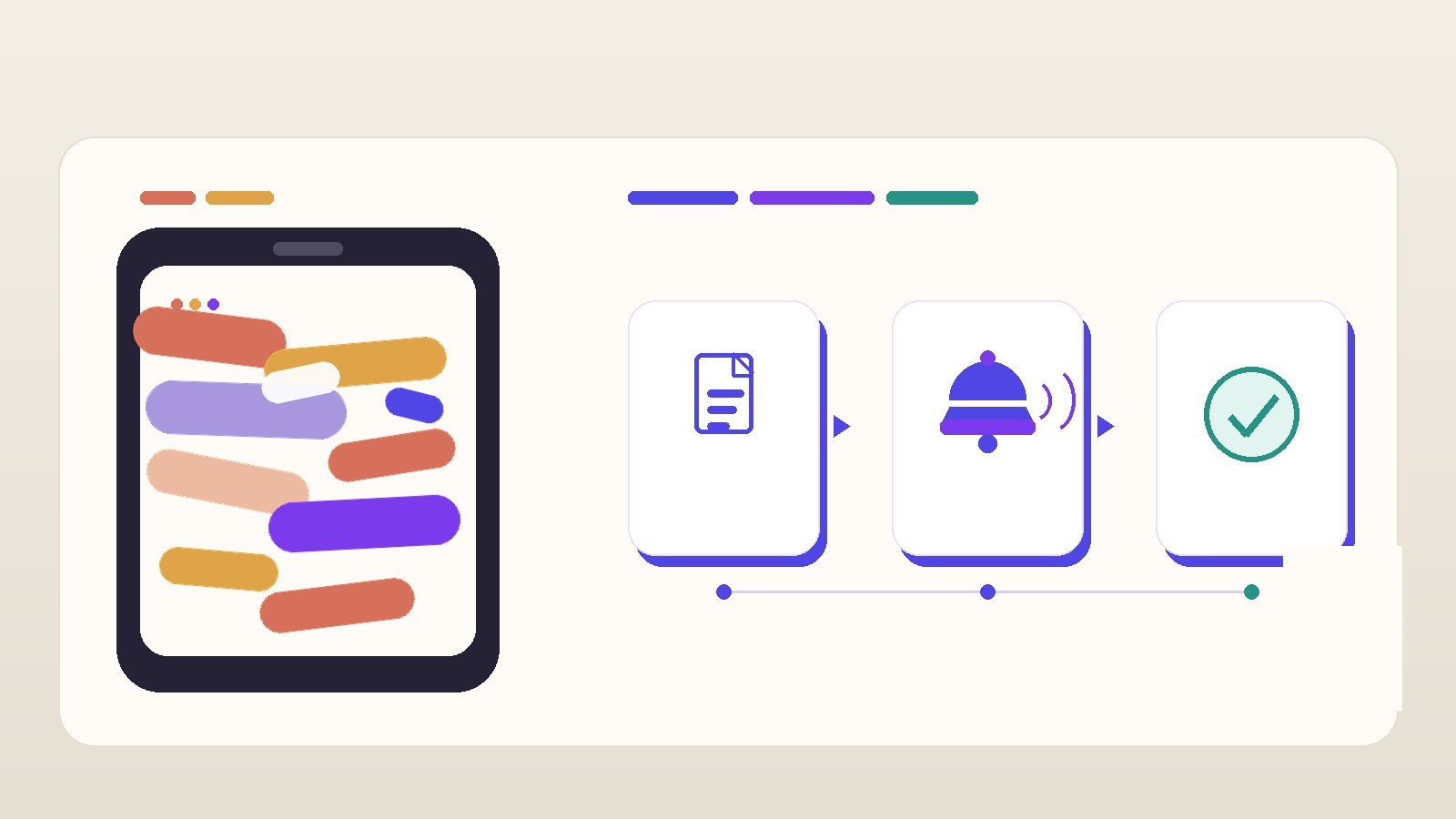
- Intake. The request arrives from a call, a web form, an app, or an integration with a motor club or insurer. The dispatcher captures the location, the vehicle type, and the problem: flat tyre, lockout, dead battery, accident, off-road recovery.
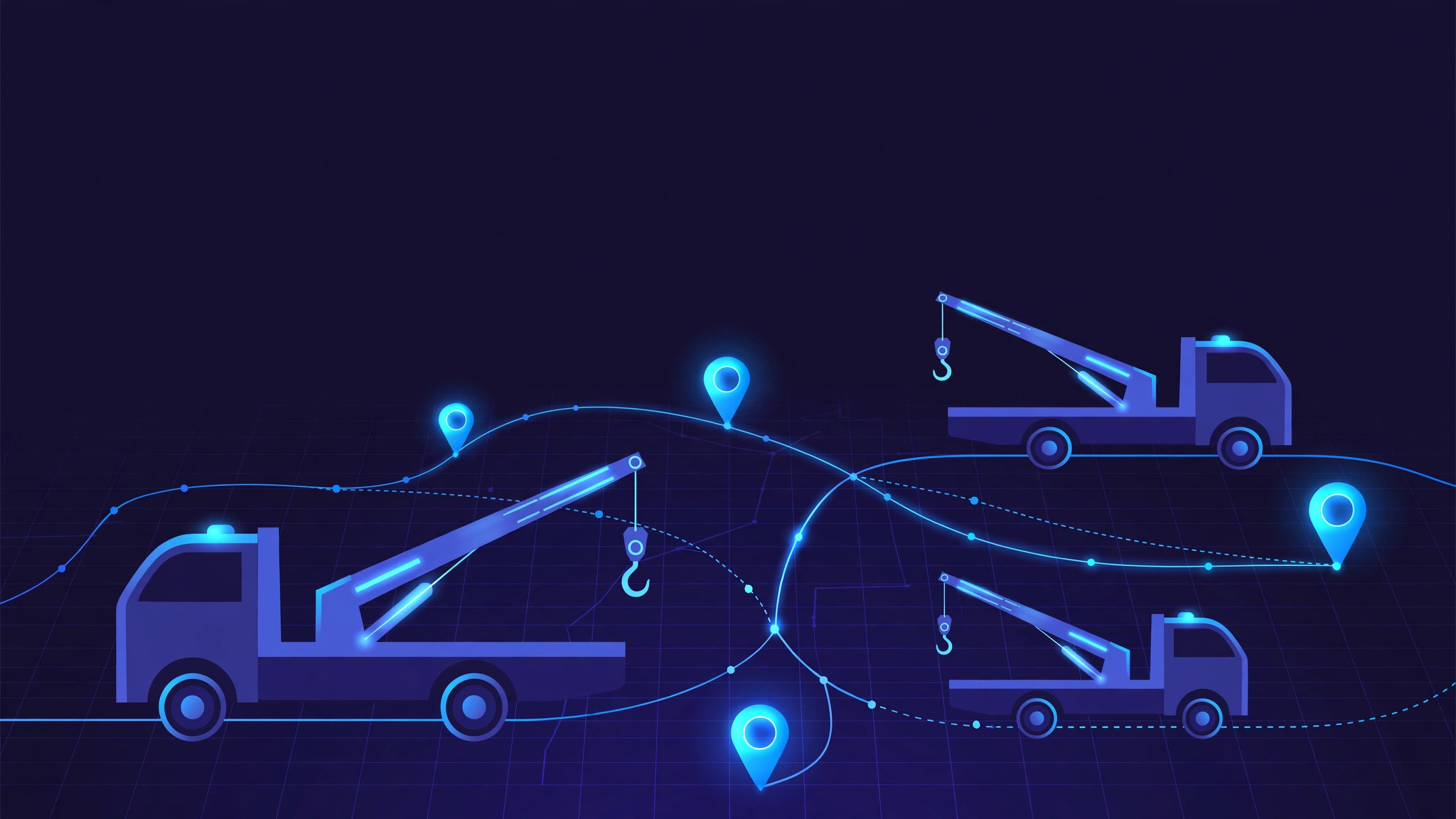
- Matching. The system filters the fleet for available, capable trucks and ranks them by estimated drive time to the scene.
- Dispatch. The job goes to the best match — automatically or confirmed by a dispatcher — and the driver accepts in a mobile app.
- Tracking. Live location feeds the ETA engine and a customer tracking page. Status changes — en route, on scene, loaded, complete — update every record in real time.
- Closeout. Photos, signatures, and mileage are captured on scene; the invoice is generated from the rate table, and the job archives into the service history.
A tight loop here means one dispatcher handles dozens of concurrent jobs instead of juggling phone calls and whiteboards.
Nearest-resource matching: capability before distance
Closest-first sounds simple, but sending the closest truck can be the wrong move. A standard wheel-lift cannot pull a truck out of a ditch, and a light-duty unit cannot recover a loaded van. Real dispatch systems match on capability first and distance second. The matching engine considers:
- Equipment. Each truck carries a profile — flatbed, wheel-lift, heavy wrecker, winch rating, low-clearance capability. A basement garage job needs a low-clearance unit even if it is further away.
- Driver state. Available, on shift, or already assigned. Off-duty and mid-job drivers never appear in the candidate list.
- Drive time, not distance. Rankings use real-time drive time, not straight-line distance. A truck three kilometres away across a river scores worse than one five kilometres away on the same highway.
- Business rules. Police rotations may require strict rotation order. Contract clients may demand a dedicated fleet. After-hours jobs go only to night-flagged drivers.
Dispatchers keep an override. Auto-assignment handles routine jobs in seconds; the dispatcher takes over for storms, road closures, and judgement calls the algorithm cannot make.
How live ETAs are computed
A live ETA is a small pipeline that recalculates every time something changes:
- GPS pings. The driver app sends the truck's position every 30 to 90 seconds, over whatever network is available. Signal gaps are normal, so the engine tolerates stale positions rather than failing.
- Route and traffic. Each assignment triggers a route from the truck's current position to the scene using current traffic conditions. When traffic shifts, the ETA moves with it.
- Driver status events. Statuses like "accepted", "en route", and "on scene" anchor the estimate. If a driver sits at the depot for three minutes after accepting, the system notices and can reassign the job to the next match.
- Historical data. Over time, the platform learns that certain zones and hours run longer than the router predicts, and applies corrections.
The ETA is then shared everywhere it matters: on the customer's tracking page, in SMS updates, and on the dispatcher's board. Accurate ETAs cut "where is my truck?" calls dramatically — which is why the ETA engine is usually the first feature a recovery company asks for.
The driver mobile app: the field end of the system
The driver app is where dispatch becomes reality. It delivers job details, turn-by-turn directions, and hazard flags, and takes back status updates, photos, and signatures. Two design decisions matter most.
First, offline capability. Recovery happens in dead zones — basements, canyons, remote highways. The app must cache the job, record photos and notes without signal, and sync when connectivity returns.
Second, status discipline. The timestamps the driver taps — accepted, en route, on scene, loaded, complete — are the raw data for the ETA engine, the billing record, and the dispute history. The app makes tapping them effortless, because sloppy statuses corrupt everything downstream.
Customer communication that removes phone calls
The biggest operational win of a dispatch platform is invisible: customers stop calling. A live tracking link sent by SMS at dispatch, a "driver is on the way" message with an ETA, and a "driver is two minutes away" alert together remove almost all status inquiries. The dispatcher stops playing relay and starts managing exceptions.
For motor-club and insurer jobs, the same event stream feeds the partner's systems, so the customer's own app shows the recovery progressing without anyone retyping information.
Billing and closeout: from scene to invoice
Recovery pricing is too complex for mental maths: hook fee, per-mile rate, winch time, after-hours premiums, storage timers, gate fees. The platform stores a rate table per client and service type, and the on-scene data — timestamps, mileage, photos — fills in the invoice automatically.
For high-volume motor-club work, billing adapters submit claims into each partner's system in their required format, with a queue that tracks every claim from pending to accepted or disputed. Disputes land in a review queue with the job's photos and timestamps attached, so dispatchers resolve them from evidence, not memory.
Closeout also feeds the analytics loop: average response time by zone, jobs per shift, revenue per truck. Recovery companies use these numbers to position trucks before demand spikes — during storms, holidays, and rush hours.
Frequently asked questions
What is the difference between dispatch software and fleet GPS tracking?
GPS tracking shows where your trucks are. Dispatch software acts on it: it converts requests into jobs, picks the right truck, routes it, keeps the customer updated, and turns the completed job into a bill. Tracking is one input; dispatch is the whole workflow.
Can dispatch software assign jobs automatically, or does a dispatcher always decide?
Both. Auto-assignment matches capability, availability, and drive time in seconds for routine jobs. Dispatchers keep an override for the unusual — storms, closures, contract rules, and judgement calls.
How accurate are live ETAs for recovery trucks?
With steady GPS pings, current traffic data, and disciplined driver statuses, ETAs are typically accurate to within a few minutes. The biggest accuracy gains come from historical corrections — learning how long certain zones and job types actually take.
What does a recovery dispatch system cost to build?
A focused first version — intake, map-based dispatch, driver app, live ETAs, basic billing — typically takes a few months of engineering. Motor-club billing automation is the expensive layer that comes next. Buying an existing platform is usually cheaper for a single fleet; building makes sense when recovery dispatch is the product itself.
Building recovery dispatch software?
Live map dispatch, a driver app, an ETA engine, or the full platform for your recovery business — the architecture follows the pattern above: intake, capability-aware matching, real-time tracking, and evidence-driven billing. We have shipped these systems. Talk to us about your project.