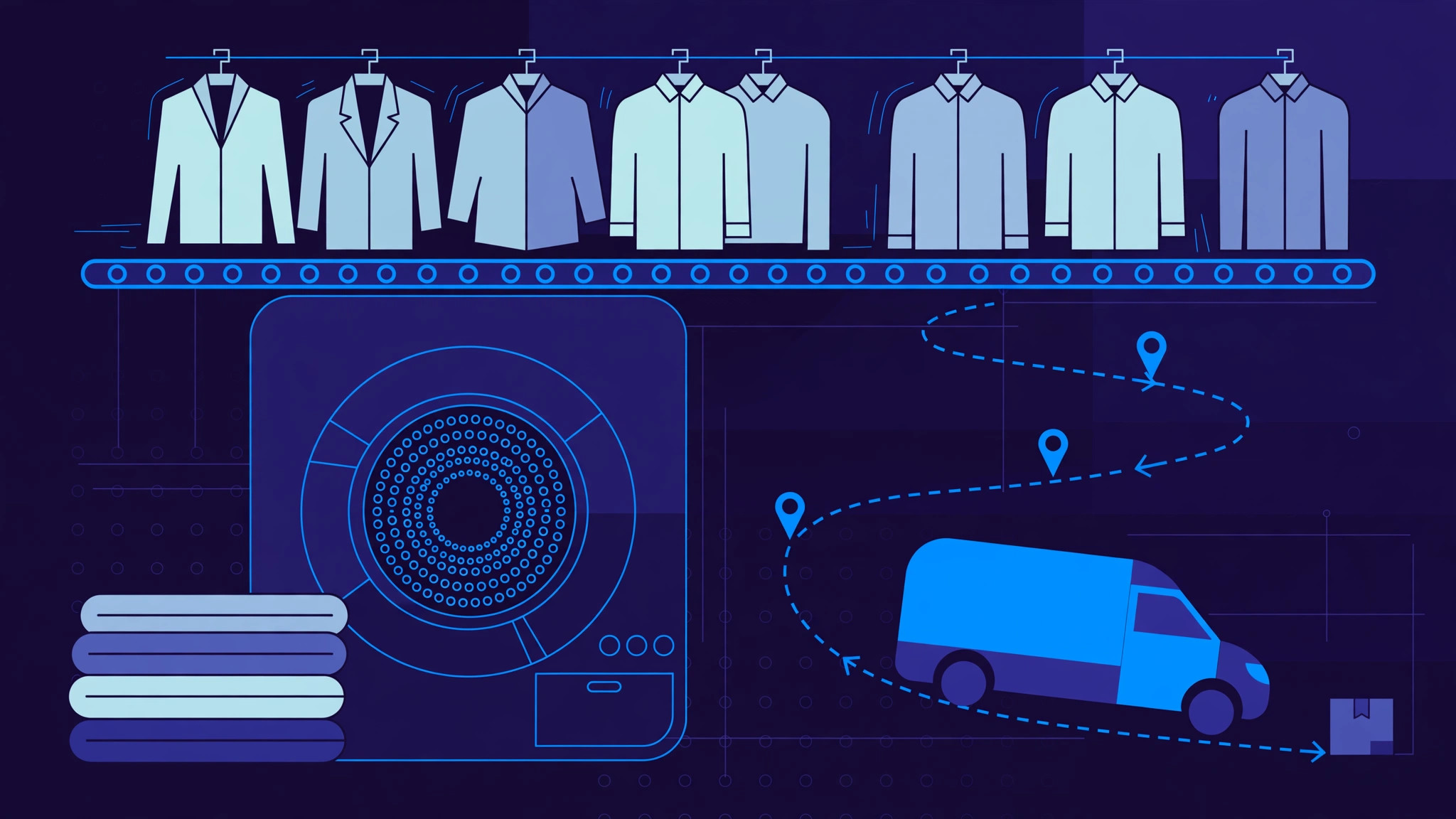
Laundry management software is the operating system of a laundry or dry-cleaning business. It runs everything from the moment a customer drops off a bag of clothes to the moment clean garments come back: the order, the price, the tag on every shirt, the wash cycle, the quality check, the delivery and the payment.
Order intake: the counter and the phone
Every order starts at the counter, on the phone, or in a customer app. Staff tap items from a price list — shirt, trouser, suit, saree, blanket — set the service, wash and fold or dry clean, and add extras such as stain treatment or express delivery. Prices come from a rate card, so the counter charges the same price for the same item every time, and the promise date is set at intake: standard in two days, express the same day, each with its own price. The customer pays a deposit or the full amount and gets a receipt with a tracking code to follow online. Walk-in, phone and app orders all land in the same queue, so nothing is lost on a paper slip.
Garment tagging and tracking
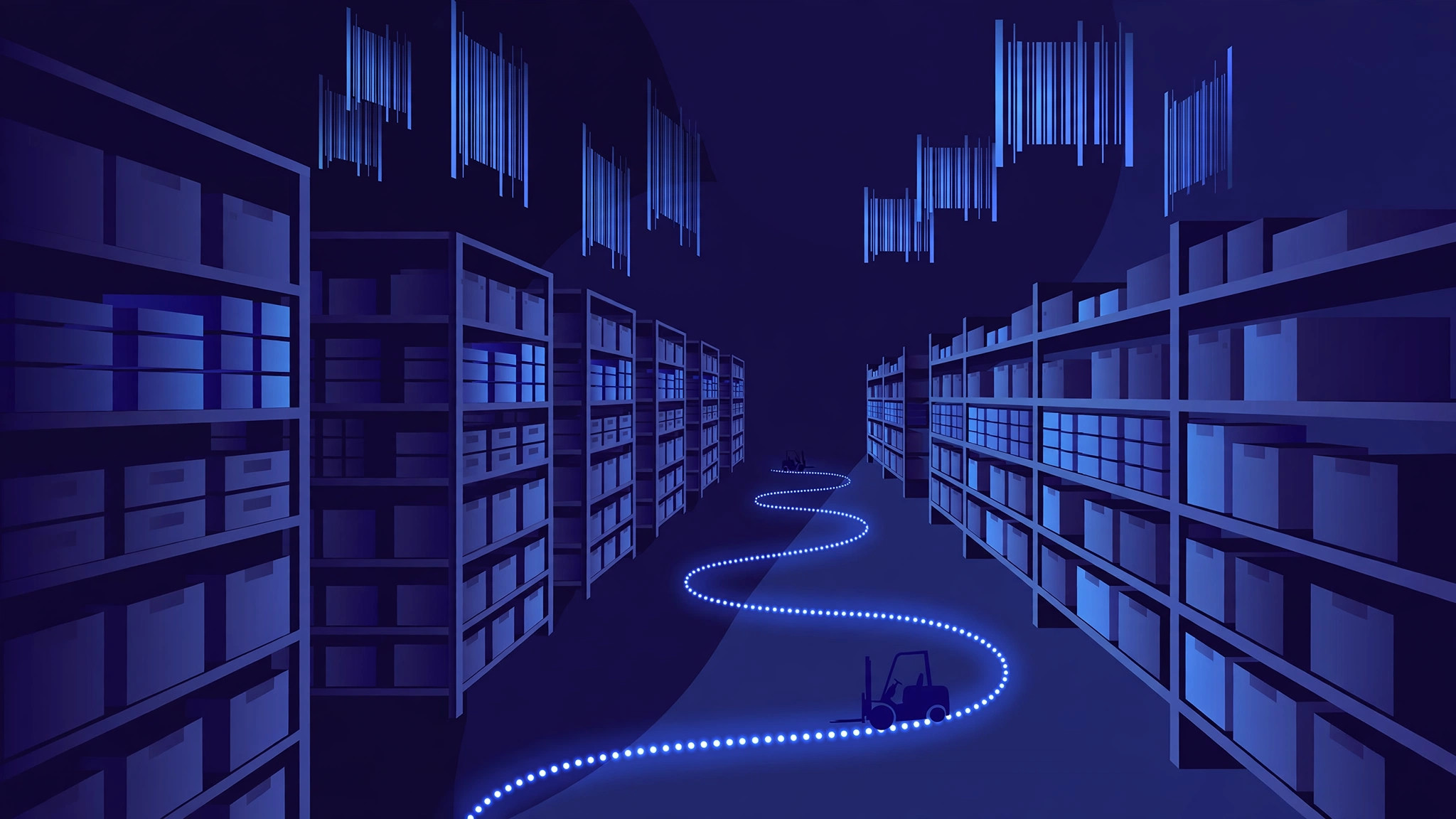
The moment an order is taken, every garment gets its own identity. A barcode or QR tag is printed — heat-seal or pin — and attached to the item, carrying the order number and the delivery date. Staff scan the tag at every stage, so the system knows where each garment is: in wash, on the press, on the rack, or out for delivery. That scan history stops the two oldest laundry problems: a shirt going home with the wrong customer, and a shirt going missing. When a customer calls to ask where their clothes are, the answer is one search away instead of a walk to the back of the shop.
The production board: wash, dry and press
The production board is where the laundry day is run. It shows every order as a card moving through stages — new, washing, drying, ironing, pressing, ready — and staff tap a card to move it on. Each stage is a station: the wash floor sorts by fabric and colour and loads machines by weight; the press station works through the ironing queue in promise-date order. Only the people responsible for a stage can move a job out of it, and every move is recorded, so a stalled job shows up before the customer notices. A good board flags what is running late against its promise date, so the counter calls the customer first.
Quality check and packing
Nothing leaves the floor without a check. Before an order is packed, staff verify every item against the original count: is everything here, is it clean, is the press right, is anything stained or damaged? An item that fails goes back for a re-wash with a reason recorded, and the order is only marked ready when the last item is packed. The system then sends the customer a message — SMS, WhatsApp or email — that the order is ready for collection or on its way. That message is the moment most "is it ready?" phone calls disappear.
Pickup and delivery: routes and drivers
For laundries that collect and deliver, the software plans the road as well as the wash. Customers book a pickup slot, the system groups nearby stops into a route, and drivers get a stop-by-stop list on a phone app with turn-by-turn navigation. The driver scans each bag at the door, and the customer signs or confirms with a one-time code — proof of delivery, not a driver's word. Customers get a live tracking link, so they see the van coming instead of waiting by the door. Route planning matters because laundry runs on density: more stops per hour means cheaper deliveries.
Payments, billing and subscriptions
Money moves in small amounts and large volumes, so the system keeps it tight. Walk-in customers pay at the counter by cash, card or UPI; app customers pay online or keep a card on file for automatic charging. Any balance is collected before the order is handed over — nothing leaves unpaid. Corporate accounts are billed differently: per kilo, per piece, or per room for hotels, with a monthly consolidated invoice generated from delivered orders. Loyalty points, prepaid wallets and membership plans — a fixed monthly fee for a set number of kilos — keep regular customers coming back.
Customers, loyalty and multi-branch
Every customer has one record: their orders, their preferences, their balance, and their history. The system remembers that a customer wants starch, or that a suit needs a delicate cycle, and prints those notes with the order. Reminders bring customers back: a nudge for orders left uncollected for two weeks, a slot reminder before a pickup. Once a business grows past one shop, the same record follows the customer across branches — an order taken at one branch can be processed at the plant and collected at another, and every branch sees the same order and price.
What good laundry software gets right
They give every garment one tag and every order one record, and every scan, payment and message updates that same record — so the counter, the wash floor and the driver all see the same truth. They never lose a garment, because a barcode ties it to its owner at every stage. They promise a date at intake and then watch it, flagging late jobs before the customer has to ask. And they close the loop on the road: routes planned, deliveries proved, balances collected before handover.
Frequently asked questions
How does laundry management software prevent lost garments?
Every garment gets a barcode or QR tag at intake, tied to the order and the customer. Staff scan the tag at each stage — wash, dry, press, pack, deliver — so the system knows where every item is at all times, and an order is only marked ready when the packed count matches the original count.
Can laundry software handle pickup and delivery?
Yes. Customers book pickup slots, the system groups nearby stops into optimised routes, and drivers use a phone app with turn-by-turn navigation and proof of delivery by signature or one-time code. Customers get a live tracking link for their order.
Does laundry management software work offline?
Most modern systems keep working when the connection drops: intake and scans are cached on the device and sync when it returns, so a counter in a basement or a driver in a dead zone keeps working.
Is laundry software worth it for a small laundry?
Yes, once orders outgrow a notebook and a wall of pegs. A small shop gains from barcode tagging that ends lost garments, a board that shows what is late, automatic ready messages, and balances collected before handover — what it saves usually pays for the system.
Build your laundry management software with InRay Labs
If you run a laundry or dry-cleaning business and need software that knows every garment, every order, and every delivery — tagging, wash cycles, quality checks, routes, and payments in one place — InRay Labs builds it. Talk to us about your laundry system.