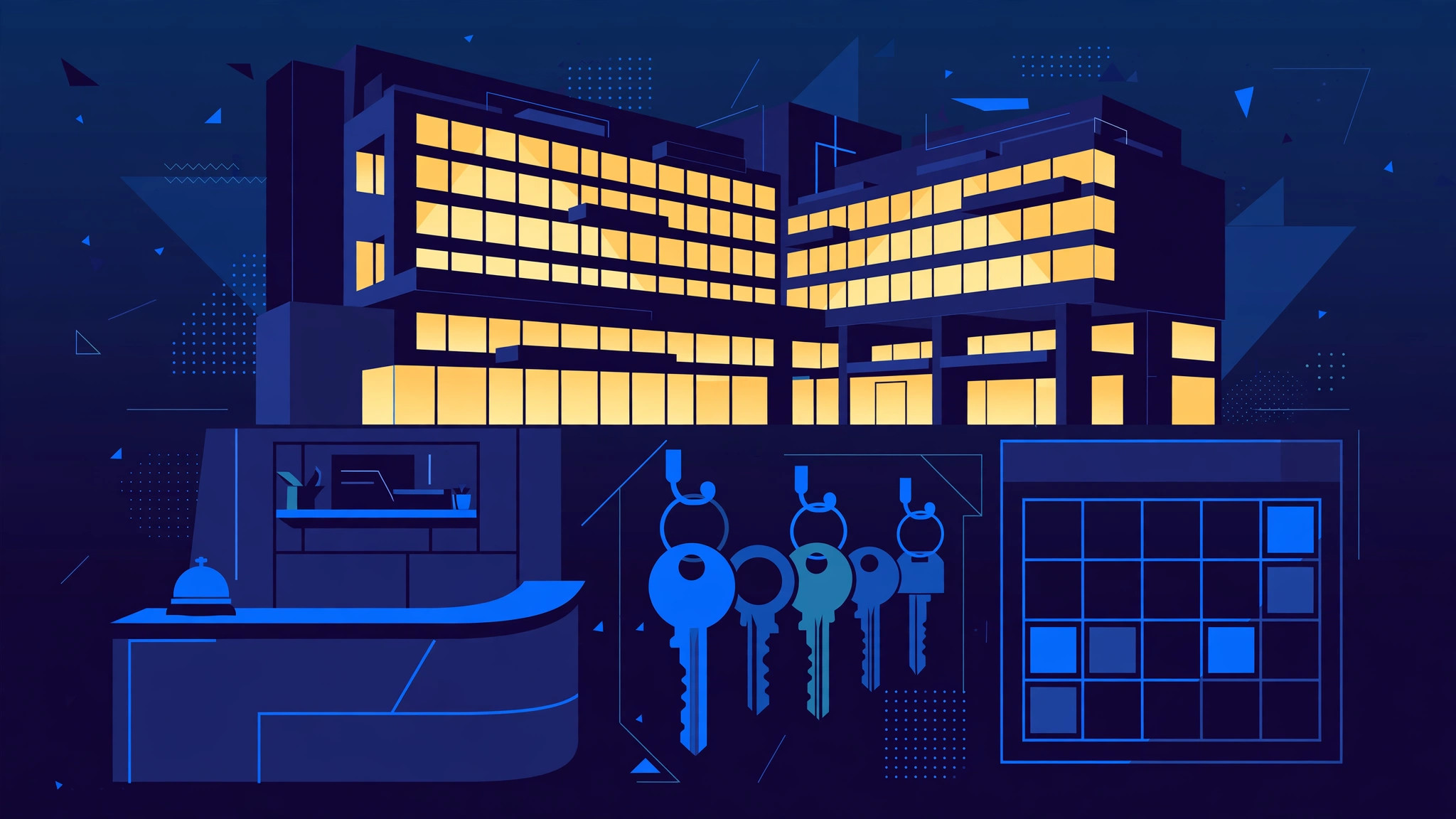
Salon and spa booking software is the system that turns a salon's chairs, staff and service list into appointments that clients can book online, in seconds, at any hour. Behind one simple "Book now" button sit an online booking page, a staff calendar, a chair and room plan, a service list, automatic reminders, payments and deposits, and memberships. When those parts share one live record of every chair, every stylist and every booking, double bookings disappear, chairs stay full, and the front desk stops answering the same phone call all day.
The online booking page: where a booking starts
Every booking begins on a page the client can reach from the salon's website, its social media profiles or a search result. The client picks a service, then a staff member — or "first available" — then a date and time. The page only shows slots that are actually free, because it checks the live calendar before it offers anything. Once the client confirms, the booking appears on the staff calendar at once, and the client gets a confirmation message by email or text. The salon sets its own rules on booking lead time, cancellation deadlines and deposits. Walk-ins made at the front desk land in the same calendar, so the online page and the paper diary can never disagree.
Chairs, rooms and staff calendars: the three resources that must line up
A salon sells time, and that time lives in three places at once: a staff member, a chair or station, and — in a spa — a treatment room. A booking is only possible when all three are free at the same moment. The software models each one as a resource with its own calendar: stylist hours and days off, chair locations, room capacity. When a client books a 60-minute massage, the system checks the therapist and a free room together. When a client books a colour and a cut, it blocks the stylist for the full combined time. If any resource clashes, the slot simply is not offered — the detail that stops the most common salon failure: two clients arriving to find one chair.
Services, durations and processing time
The service list is the heart of the system. Each service has a name, a price, a duration and the staff who can perform it — a skin fade only with the senior barber, a balayage only with a trained colourist. Some services need two staff at once, such as a manicure and pedicure together, or a four-hands massage; the software books both people and only offers times when both are free. Processing time is the subtle part: a colour takes 45 minutes of work but 90 minutes of chair time, and the stylist is free during the wait. Good systems track both, so the chair stays blocked while the stylist can take a quick trim in between. Prices can also vary by staff level.
Reminders, deposits and no-shows
An empty chair is money a salon cannot recover, so no-shows are the problem booking software is judged on. The first defence is reminders: an automatic message a day before the appointment, and another a few hours before, on the channel the client actually reads — text, WhatsApp or email. The second is a deposit: the client pays a percentage or a fixed amount when booking, held against the final bill and lost if they do not show up. The third is the no-show record: the system counts how many appointments each client has missed, so the salon can ask repeat offenders for a deposit before holding a Saturday slot. A waitlist closes the loop: when a cancellation opens a gap, the next client is notified automatically.
Memberships, packages and prepaid sessions
Regular clients are a salon's steadiest income, and memberships turn them into recurring revenue. A monthly membership might include one facial and a discount on everything else; a prepaid package might be six hair spas bought at once. The software tracks every membership's balance: sessions left, expiry date and next payment. It flags packages about to expire and sends renewal reminders before the client lapses. At booking time, a member's session is deducted automatically instead of being charged. Done well, memberships fill quiet weekday slots with clients who have already paid.
Checkout, commissions and the front desk
When the service is done, checkout should take seconds. The bill is pre-filled from the appointment: the services, the stylist, the member discount and any retail products sold, such as shampoo. The client pays by card, wallet or UPI, and the payment is recorded against the same booking. Tips are kept separate from sales, and commissions are worked out per person: each stylist has a rate, and the system splits the revenue when two people shared a visit. At the end of the day the owner sees a simple report — takings per stylist, chair utilisation, no-shows, renewals due — instead of adding up a paper book.
What good salon booking software gets right
The best systems are boring in the right ways. They keep one live record of every chair, room and stylist, so a booking can never clash. They make the client's path short: pick a service, pick a person, pick a time, pay a deposit, done. They treat reminders, deposits and waitlists as one system, because an empty chair is the most expensive thing in a salon. And they give the owner clean numbers instead of reports stitched together from a diary, a card machine and a spreadsheet.
Frequently asked questions
How does salon booking software stop double bookings?
Every booking checks three resources at once — the staff member, the chair or station, and the treatment room — against one shared live calendar. A slot is only offered when all three are free, and once booked it locks immediately, so two clients can never confirm the same chair.
How does salon software reduce no-shows?
Automatic reminders go out before each appointment, deposits make clients commit when they book, and the system tracks each client's no-show history so repeat offenders can be asked for a deposit. Waitlists fill cancelled slots automatically.
How do memberships and packages work in salon software?
A membership or prepaid package is stored as a balance on the client's record: sessions remaining, expiry date and next payment. When a member books, the session is deducted automatically. The system flags expiring packages and sends renewal reminders before the client lapses.
Can salon software handle more than one branch?
Yes. Each branch gets its own calendar, team and chairs, while the client record stays shared — so a regular is a regular at every branch. The owner sees combined reports across branches, and clients can book at whichever location suits them.
Build your salon booking platform with InRay Labs
If you run a salon or spa and need booking software built around your chairs, your team and your memberships — online booking, staff calendars, reminders, deposits and all — InRay Labs builds it. Talk to us about your booking platform and we will scope a system that fits how your salon actually runs.